key stage 2, life

Bedtime Battles Solved: Picking Mattresses Kids Actually Sleep On

Every parent knows the routine: bath, pyjamas, book, and then the negotiating begins. “Five more minutes,” “I’m not tired,” “Can I sleep in your bed?” Some of this is completely normal childhood stalling. But sometimes the real issue isn’t the bedtime routine at all, it’s what’s actually underneath the sheets. An uncomfortable or unsupportive mattress can make it harder for children to settle down, stay asleep, and wake up feeling rested. Choosing the right sleep surface won’t solve every bedtime struggle, but it can remove one hidden obstacle that often goes unnoticed by parents.

Bedtime at KidsChaos

A mattress that’s too firm, too soft, or simply the wrong size for a growing child can quietly turn bedtime into a nightly struggle. Here’s what actually matters when choosing one.

1. Why Sleep Quality Matters So Much for Kids

Sleep isn’t just downtime for children, it’s when a huge amount of physical and mental development happens. Guidance published by the CDC recommends that children aged 6 to 12 get 9 to 12 hours of sleep per night, with teenagers needing 8 to 10 hours, yet a large number of kids fall short of these numbers regularly.

A mattress that causes tossing, turning, or frequent waking can chip away at that total sleep time without a parent ever realizing the mattress is the culprit.

2. Signs the Mattress Might Be the Problem

Kids rarely say “my mattress is uncomfortable.” Instead, the signs tend to show up sideways:

●       Frequent complaints of back or neck discomfort in the morning

●       Waking up multiple times overnight without an obvious reason

●       Wanting to sleep on the couch, floor, or a sibling’s bed instead of their own

●       Visible sagging, lumps, or an uneven surface on a mattress more than a few years old

If more than one of these signs shows up consistently over a few weeks, it’s worth taking a closer look at the mattress itself before assuming the issue is purely behavioural.

3. Firmness Needs Change as Kids Grow

A mattress that was perfect for a toddler often isn’t right once a child hits their growth spurt years. Younger children generally need firmer support for developing spines, while older kids and teens can handle a bit more cushioning without losing support.

This is one of the most overlooked reasons a mattress that worked fine for years suddenly seems to cause restless nights, the child’s body has changed, but the mattress hasn’t.

4. Material Choice Affects More Than Comfort

Different mattress materials handle temperature, support, and durability very differently, and kids’ sleep environments have their own particular demands, spills, allergies, and constant movement among them.

●       Foam materials tend to contour well but can retain heat, which matters for kids who run warm at night

●       Innerspring options often provide better airflow and a bouncier feel that some kids prefer

●       Hybrid designs combine both, offering support with better breathability

Washability is another factor parents often underestimate until it becomes urgent. A removable, machine-washable cover can turn a middle-of-the-night spill from a crisis into a five-minute fix.

5. Sizing Is Easy to Get Wrong

It’s tempting to buy a larger mattress a child can “grow into,” but an oversized bed can actually make some children feel less secure at night, particularly younger kids used to a smaller sleeping space. On the other end, a mattress that’s already too small forces awkward sleeping positions that lead to discomfort.

Matching the mattress size to the child’s current age and comfort preferences, rather than purely planning years ahead, tends to lead to better sleep in the meantime. A mattress upgrade every few years as a child grows is a far smaller cost than months of poor sleep in the name of long-term savings.

6. Where to Actually Shop for a Kids’ Mattress

Because kids’ sleep needs are different enough from adult needs, it helps to shop somewhere that treats it as its own category rather than an afterthought. Retailers offering mattresses specifically designed with growing children in mind tend to account for the firmness, breathability, and washable covers that matter most for this age group.

Betten-ABC, for instance, offers dedicated children’s mattress lines built around these exact considerations, which makes comparing options considerably easier than sorting through a general adult mattress catalog.

7. Trial Periods and Return Policies Matter More Than You’d Think

A mattress that feels fine in a showroom can behave completely differently after a few weeks of actual use. This is especially true for kids, who often can’t articulate discomfort clearly until it’s been bothering them for a while.

Look specifically for retailers offering a genuine trial period at home, rather than a simple in-store test. A mattress that seemed comfortable for ten minutes in a shop doesn’t always hold up after two weeks of real sleep.

8. Simple Steps Toward Better Bedtime

A few practical habits pair well with the right mattress choice:

●       Rotate the mattress every few months to prevent uneven wear from a child’s usual sleep position

●       Use a breathable mattress protector rather than heavy plastic covers that trap heat

●       Reassess firmness needs every year or two as your child grows

●       Involve the child in the decision when age-appropriate, since comfort is genuinely subjective

Final Thoughts

Bedtime battles aren’t always about willpower or bedtime routines gone wrong. Sometimes the real fix is far simpler than another sticker chart or bedtime negotiation, it’s making sure what’s underneath your child actually supports a good night’s sleep.

Getting the mattress right won’t solve every bedtime struggle, but it removes one very real, very physical reason kids resist sleep in the first place.

This is a collaborative post.

create, key stage 2, key stage 3, kids

Why Play Is Still the Most Effective Training Tool for Children

Child’s play may look simple as an observer, however beneath the surface, it’s one of the most powerful learning tools children have. Long before worksheets, structured lessons or formal programs enter the picture, children naturally use play to understand the world around them. And even as educational methods evolve, play remains the foundation of healthy development.

Whether the goal is strengthening communication skills, building confidence or helping your child become the best version of themselves, play provides an environment where learning feels natural, joyful and meaningful.

Play creates a safe space for learning and experimentation

Children learn best when they feel comfortable, supported and free to take risks. Play offers exactly that. In a playful setting, children don’t fear mistakes. They try new things simply because they’re curious. When a child builds a tower that collapses or experiments with new words during pretend play, they’re strengthening critical cognitive and emotional skills without the pressure of perfection.

This sense of safety is especially important for children who struggle with communication or confidence. Whether a child is navigating tricky social interactions or developing language skills, play provides room to explore, imitate and practice. It’s why a child speech therapist often incorporates games, toys and pretend scenarios into sessions. Children stay engaged, and the learning process becomes intuitive instead of stressful.

When kids play, they’re not just passing time. They’re developing resilience, problem-solving abilities, emotional regulation and curiosity. These core skills form the foundation for later academic success and personal growth.

Play naturally encourages communication and language development

One of the most powerful outcomes of play is its impact on communication. During play, children are exposed to new words, concepts, routines and social interactions, often without even realising they’re learning. Whether they’re narrating a pretend cooking session, negotiating rules in a game or explaining their ideas to a parent, play stimulates language in authentic ways.

This is why many therapists and educators use toys, puppets, interactive games and storytelling as tools to build vocabulary and sentence structure. A child might practice turn-taking during a board game or learn descriptive words while playing with sensory materials. Because the context is fun and engaging, the learning sticks.

For families working with a child therapist, play becomes an extension of therapy at home. Parents can reinforce skills through simple routines like narrating actions, labeling objects, asking open-ended questions and joining in their child’s imaginative worlds. Learning through play doesn’t require complicated setups; it simply needs presence and interaction.

Play supports emotional intelligence and social skills

Emotional development happens through lived experiences, and play provides those experiences in abundance. When children take part in cooperative games, pretend scenarios or group activities, they learn how to share, compromise, self-advocate and recognise emotions in themselves and others.

Pretend play is especially powerful. When children act out roles like teacher, doctor, or parent, they explore empathy and perspective-taking. They learn how to express feelings, solve conflicts and navigate relationships in a low-pressure environment.

For children who find social interactions challenging, structured play with guidance from parents or professionals offers essential support. Activities like turn-taking games, role-play or cooperative building projects give them opportunities to practice social skills that become invaluable later in school, friendships and everyday life.

Play strengthens cognitive skills without feeling like work

Cognitive development happens most effectively when children are actively engaged. Play encourages curiosity, exploration and experimentation, all of which drive early learning.

Through play, children strengthen skills such as spatial awareness through building activities, and problem-solving by figuring out how pieces fit.

These skills translate into improved academic performance later. Children who play regularly tend to be more flexible thinkers, better problem-solvers and more confident learners.

Parents can support this by offering accessible materials like blocks, art supplies, and pretend-play kits which allow children to lead the activity.

Play helps children become their best selves

At its core, play helps your child become the best version of themselves. It nurtures strengths, encourages independence and fosters confidence. Instead of pushing children into overly structured learning environments too early, play allows them to learn on their own timeline and in their own way.

In short, play isn’t just for fun. It’s the foundation of healthy childhood development and one of the most effective tools for teaching language, social skills and emotional resilience. By creating space for play, offering gentle guidance and encouraging curiosity-driven learning, families can support children in ways that feel natural and uplifting. In a world filled with structured programs and high expectations, play remains the most powerful pathway to growth.

This is a collaborative post, which allows me to continue creating organic content both here and on incredibusy.com

crafts, create, easter, key stage 2

Pom pom Bunny
Pompom bunny

Pom pom Bunny has been very popular, we’ve made LOADS of them, and they are pretty easy to make (particularly if you have a pom pom maker!)

This is a really good Spring or Easter Craft, fairly straightforward, and much coveted amongst the kids’ friends. And very simple instructions to make the pom pom bunny.

You will need:

– Two yarn pom poms, one large for the body, one smaller for the head.
– Googly eyes
– Pink Hama bead/Perla bead or similar, a small pink or red button will do.
– Contrasting fabric for the ears.

Make the two pom poms, either in the traditional cardboard doughnuts, or using a fork, or a pom pom maker. We used a hot glue gun to adhere the two pom poms together. You could stitch them together too…

Glue the eyes and attach the ‘whiskers’ and little pink nose with a strong glue.

pompom bunny ears

Using pinking shears, cut the bunny ear shapes, and scrunching them to create creases at the bottom, secure them together with a piece of wool (the same wool as the pom poms so that when you tie them to the bunny’s neck, you won’t see the join).

I think this really makes the pom pom bunny quite unique, and it’s a great way to upcycle old bits of fabric – in fact you may recognise this blue fabric from the leaping rabbits denim pocket purse we made recently too – click here to check that out, you won’t be able to resist having a go at that!.

pom pom maker

If you would like to WIN a two pack Pom pom maker from Clover (35mm and 45mm) at Hobbycraft, pop over to our facebook page – LIKE our page, and tell us what you would like to make with this fabulous, easy to use pom-pom maker. (this giveaway has now closed, April 3 2014)

Ali also blogs over on incredibusy.com and is a new lover of Instagram too… pop over and say hello!

crafts, create, education, key stage 2

These skills your kids learn in school might surprise you

In the classroom, your kids learn about a range of academic subjects, and the basics like how to read and write. They gain the foundations for a fulfilling life through interactive classes at school and as you help with their homework. Children are also learning many soft skills, and you may not realise the many ways your child is developing to one day be a well-rounded adult.

children playing and learning

What are ‘Soft Skills’?

This term refers to general traits that help individuals relate better to and get along better with one another. These interpersonal skills can help them professionally in the workplace, as they get along well with coworkers, and personally, as they form friendships more easily and appreciate others. Below are four soft skills they learn in a quality educational environment.

Great Teamwork

Along with learning about numbers and spelling in school, children also learn from teamwork. They can learn how to problem solve in classes with group projects, for example, to help them become strong at critical thinking. They also learn how to work together toward a goal, such as completing a cake recipe or developing a class presentation together. Kids can also develop friendships with classmates who teach them about respecting someone else and having empathy and compassion. 

Strong Communication

There are many ways to communicate at any age. That includes verbal and written. A couple of other ways that you might not have readily thought of are drawing, reading and listening. Becoming good at communicating involves all of these areas, and it is important for students to excel in this area as it will help them form connections with others. That can prevent social isolation, sadness, hopelessness, and reduced self-esteem. Feeling more confident can help kids and teens do well in academic classes as they believe in themselves.

Science Sparks Book review

Leadership Skills

The beginnings of being a great leader can be seen in many children inside and outside the classroom. For example, they may try many sports and need to be resilient if they do not make the team or their team does not win every game. They may also want to volunteer from a young age and be great at managing their time. These skills are reinforced in quality state and boarding schools, where the focus is on personal growth and learning. 

The Basics of Manners

Good manners are important in social life; developing them can happen in school. That could be the words “please” and “thank you”, as well as keeping the door open for the person behind them, these activities show respect and appreciation for other people. Youth can also practice sharing with their classmates to teach them positive interactions with others as part of healthy development.

Summary of School Skills

Kids learn more than just academics at school. They also build soft skills, from teamwork and communication to creativity and leadership, which can prepare them for future school years and adulthood afterward. Ask your children what they are learning in class, and their responses are likely to pleasantly surprise you.

This is a collaborative post.

crafts, google+ hangouts, key stage 2, kids

Christmas Cards – Stained Glass

There’s still time to make your CHRISTMAS cards, let’s get creative!

KidsChaos_ChristmasCardsStained-Glass

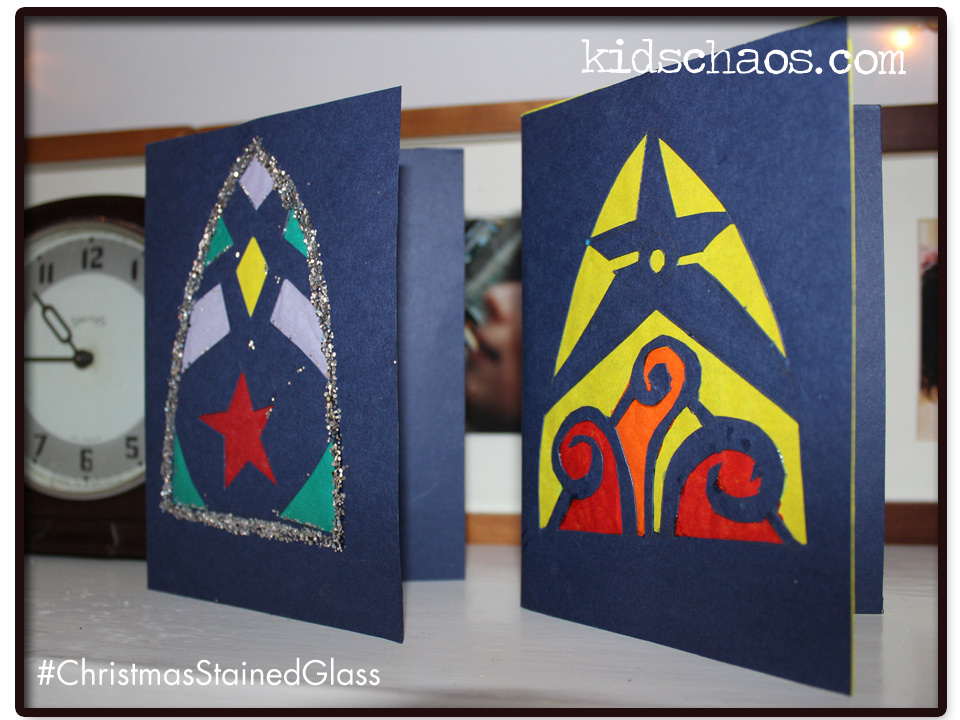
So we’ve gone all churchy and made these lovely stained glass window style cards…. cutting shapes from the card, and gluing coloured tissue paper behind the apertures.

Eek… I let the boys use a scalpel!

These look fab with a tea-light popped inside (battery operated for safety) or stuck to a window.

Christmas-Card-Hangout-RedTedArt

You may also like our Potato print button nose rudolph cards, and to watch the google+ hangout which was hosted by @RedTedArt here: and Maggy’s fabulous round-up with LOADS of ideas from some amazingly creative blogs including some more stained glass from peaklepie here: christmas-card-ideas-for-kids.

KidsChaos_ChristmasCardsMantle

Oh, by the way, Pinterest! Pop over say hello x LIKE IT? Pin it!

Published 4 Dec 2013.

FREE printables, halloween, key stage 2, kids

Halloween Pumpkin Paper Pom-Pom FREE printable

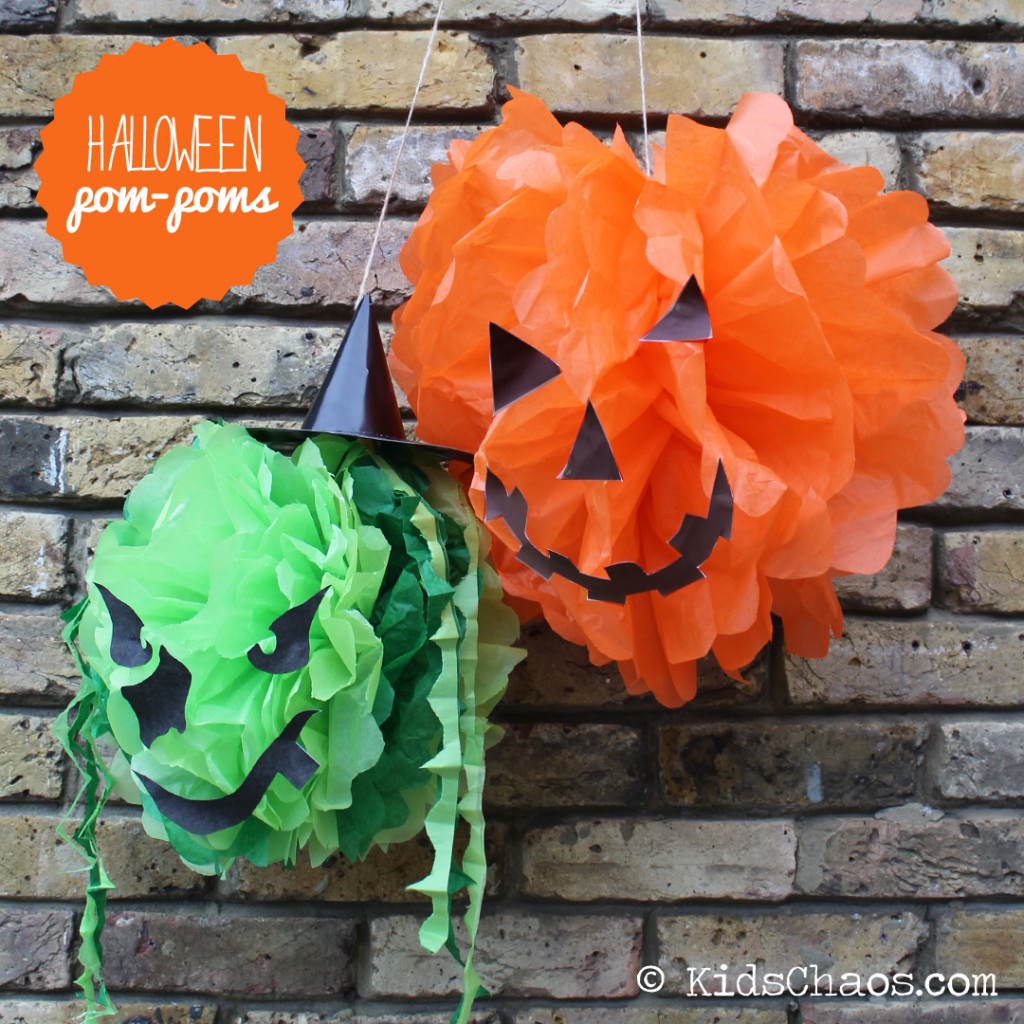
Pumpkin-Halloween-Pompom-Kids-ChaosHalloween-pumpkin-face-template-Kids-ChaosWe got a little bit seasonal and decided to turn our giant orange paper pom-pom into a PUMPKIN!
So here’s a halloween pumpkin FREE printable for you to download, print off and stick with a Pritt stick onto to the paper pom-pom – how cool is this! If you like this, you’ll like 11yo’s spin on it – with his FREE downloadable Witch’s face here.Witch and Pumpkin Halloween Pompoms

Really easy Pumpkin face – halloween pumpkin free printable, have a go by clicking here for our FREE downloadable template just print off, and cut out the shapes, in fact, print two, and use one as a template for your pumpkin this year too!!

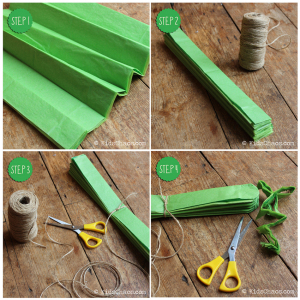
step-1-4-make-a-paper-pom-pomclick here for FULL HOW TO instructions on making the paper pom-poms

12 simple steps – really easy to follow, our kids have been making them in ALL sorts of colours – we’ve even mixed up different shades of green here…
If you fancy having a go yourself click here.

Free printable Pumpkin face, just attach to giant paper pom-pom or use as a template to carve your pumpkin!

If you have a thing for giant paper pompoms, click here to see our crepe paper version, with raindrops!

This post was first published Sept 29 2014. inspired by a *how to* video by RedTedArt and myself

Ali also blogs over on aGreenerLifeforus.com and is a lover of Instagram too… pop over and say hello!

crafts, gardening with kids, key stage 2

The Main Ingredients To Your Child’s Development

When you are trying to ensure that your child will have a good start in life, it all comes down to their development, and ensuring that this is as strong as can be. There are actually quite a few elements to this that you will need to consider, and it’s important to make sure that you are going to think about early development. A strong early development is the kind of thing that can really help your child in many ways, so it’s definitely important to focus on this.

Pic Source – CCO License

However, you might be wondering what the secret is to your child’s development working out as it should. As it happens, there are a number of ingredients to this that you will want to look out for and actively encourage if you are going to ensure this is going to work as well as possible. So let’s take a look at what those ingredients are and how you can help your child to build them.

Love and Acceptance

This is one of the main things that you will always want to make sure you are providing, as, if there is enough of this, it really will make a huge difference to your child’s life in quite a powerful way. It’s incredible actually, how well this can work, and you should definitely make sure that you are thinking about this if you want to try and encourage your child to develop as fully as possible. Love and acceptance are going to mean that pretty much everything else falls into place easily.

Of course, you don’t need to learn how to love your child, but you will find that the acceptance part can take a while. And what is most important is not only that you are feeling love and acceptance, but that you are actively expressing it to them. This is what will make the difference, and what they will notice, and you will find that it will help with their development more than pretty much anything else at all.

So be sure to express this as early as possible and frequently too. You will find that it’s going to make a world of difference to how effectively they develop.

Encouragement

At every stage of development, no matter what the specific skills are that are being developed, you will need to make sure that you try to encourage your children as best as you can. Encouragement is going to mean that you are much more likely to actively and effectively expect their development to go well. Put simply, children are always going to find that their own development is stronger and better when there is plenty of encouragement from the parent.

Strong encouragement from you means that they are going to feel that anything is possible. Of course, it can take a while to get this right and you might find that you need to figure out for yourself what kinds of encouragement work and what kinds don’t seem to work so well. But all in all, having a strong ability to encourage your child in whatever they are doing is one of the best things you can give them. You will notice the effects of this quickly, and it’s really amazing what it can do for your child in general.

Learning Types

It’s also a good idea to try and figure out the learning types of your child, as everyone has their own combination and this is something that you are going to find really useful to consider. For instance, some people tend to learn better through kinetic movement, and some people find it much easier to learn by rote. Those are just two examples, and perhaps something that you are going to want to help your child to discover for themselves, but the point is that you should be looking out for what their learning type is so that you can hopefully encourage them to make full use of this.

It’s also important to make sure your child has the best possible chance of learning well. So from making use of resources like those available from DoodleLearning to ensuring that you are doing all you can to encourage them, you’ll find that this makes a huge difference overall. It’s absolutely something that will help your child to develop.

The earlier you do this, the more of a positive impact it can have on their own overall development, and it’s really quite incredible how well this can work in the long run. So make sure that you are thinking about this if you want to keep your child’s development as strong as possible, as it’s the kind of thing that is going to be hugely important to them now and later on as well.

Play

People often forget this, but one of the most important ingredients to any development is play. Your child needs to have plenty of play in their life, and this is one of the main things that should be encouraged at every step of the journey. Play is so central, and vitally important to your child’s development that they are simply not going to get anywhere without it. Not only is it enjoyable and fun, it’s also one of the main early ways that children learn, and it’s a naturally powerful way to make use of one’s curiosity in trying to find out more about the world.

With that in mind, it’s really important to make sure that you are encouraging play as much as you can, and that your child is going to be able to make full use of it as a way of being. The more that this is the case, the better that it’s going to be for their development, and it really is incredible how much of a difference this can make.

As it happens, just as there are different learning styles, so too there are a range of play types, and you might want to try and figure out which type your child tends to enjoy the most. They might be able to get more out of that way of playing, as well as trying out some others, so a general awareness of both can be really useful all in all.

Building Blocks of Education

As well as those qualities, there are also a few building blocks to their education which you are going to want to encourage too and which can help a great deal. In fact, you would probably consider these to be absolutely essential if you are going to try and ensure your child’s development is as strong as possible. That’s the kind of thing that you should absolutely make sure you are not overlooking if you can help it.

These include basic numeracy skills as well as early literacy skills too. That is the kind of thing that you are going to want to think about, and it’s vital that you are going to try and do all you can to keep this as strong as possible. The building blocks of education are going to be really important for you to think about, so make sure that you are.

Those are the main ingredients to your child’s development you will want to encourage.

This is a collaborative post.
crafts, create, google+ hangouts, key stage 2, kids

spiral flowers newspaper

Fairy Tale crafts – taking inspiration from Snow White and the Seven Dwarves we decided to upcycle a charity shop mirror and create the famous Mirror Mirror on the Wall….

This was a fabulous team effort, and my son now proudly has this Fairy Tale Craft beauty hanging on the wall in his bedroom.

You will need:

Old sheets of newspaper
Cocktail stick
Glue stick
Stronger glue, (I recommend a glue gun!)

Instructions:

1) Roll the newspaper sheet diagonally from the corner, using the cocktail stick to get you started, so that the roll is nice and tight. When the cocktail stick starts to disappear inside the paper, gently pull it out, and continue to tightly roll the newspaper to create a long ‘stick’ – the first of MANY!

2) Flatten the ‘stick’ using a hard surface.

3) Taking your cocktail stick, start to roll the flattened ‘stick’ into a tight spiral, securing it with glue as you get to the end of the spiral.

4) When you have enough of these spirals, you can start to build up the pattern around the mirror – we found that the glue gun was the best tool for this!

KidsChaos-Mirror-paper-spirals-selfie

You could also spray paint the spirals, however we like the newspaper spirals in their natural form!

KidsChaos-newspaper-flowers

 Ali also blogs over on incredibusy.com and is a new lover of Instagram too… pop over and say hello! And I’ll be adding this to Lizzie’s#MagpieMonday as I love to salvage, upcycle and re-use stuff!

Fairytale KidsChaos RedTedArt Video

If you’d like to see more Fairy Tale crafts, firstly pop over to see our Jack and the Beanstalk Reward Chart, and then click the youtube link here, as I got together with Missie Lizzie who talked magic beans, Anthea with her elves’ shoes, Kelly talked Rapunzel, and Maggy at Red Ted Art (talking three little pigs) who hosted a Fairy Tale Craft google+ hangout.

crafts, google+ hangouts, halloween, key stage 2, kids

Chaos writes:

kidschaos-dragon-shadow-puppetHere’s a very simple stick craft we’ve been doing this week… great shadow puppets inspired by Chinese New Year:

You’ll need some sticks (!) from the garden, or as we do, collected on weekend walks by small children. Some black card, sellotape, a pencil, scissors and some ‘brads’ (the pins with bendy legs, I never remember what their name is!) Oh, and some coloured tissue paper or sweet wrappers. AND a torch if you fancy doing a shadow puppet show!

We drew the dragon ‘pieces’ out onto the black card – cut them out, and joined them together with the brads (we used a bit of plasticine behind the card, and pushed a pencil through to make the hole for the brad).

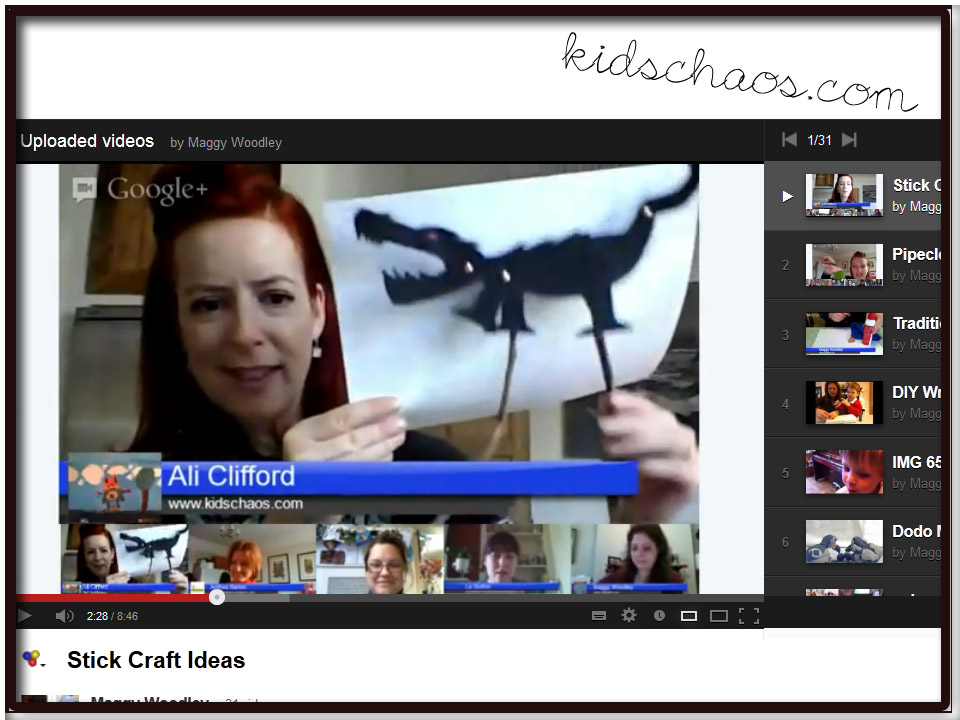
KidsChaosRedTedArt screen grabAttach the sticks with tape at the back and you’re ready to go! You’ll need a couple of characters for the shadow puppet show – standing behind a large white sheet – we dimmed the lights, shone the torch and tried them out. We made up some short stories for our characters and put on a fun silhouette show!!

Click the YouTube link to view the Google+ hangout hosted by Maggy Woodley from Red Ted Art and meet me Ali Clifford at the Stick Craft hangout with Anthea Barton  from Zing Zing Tree, Kelly Innes ( Domestic Goddesque) and Liz Burton.

Don’t forget to head over to Red Ted Art and check out the links for all the crafts featured on the video:

I also write over on www.agreenerlifeforus.com 🙂 and incredibusy.com (first published 2013)