crafts, kids, teenage reviews

How To Use Peel and Stick Wallpaper With Your Kids: From Full Rooms to Crafts

Decorating your home with kids can be a fun, creative, and bonding experience. With the rise of Peel off wallpaper, transforming a room has never been easier. Unlike traditional wallpaper, peel and stick options are simple to apply, remove, and reposition, making them ideal for families who want flexibility and style. From full-room makeovers to small DIY craft projects, this guide covers everything you need to know to use peel and stick wallpaper with your kids.


Why Peel and Stick Wallpaper Is Perfect for Kids

Peel and stick wallpaper offers numerous benefits for families with children:

  • Easy Application: No paste, no mess, and no special tools are needed.
  • Removable & Reusable: Mistakes are easy to fix, and designs can be changed as kids grow.
  • Safe for Walls: Gentle adhesive won’t damage paint or plaster.
  • Variety of Designs: Endless options from playful patterns to educational motifs.

By choosing kids wallpaper, you can create a room that’s not just functional but also a source of inspiration for your little ones.


Transforming Full Rooms With Kids Wallpaper

When you want to make a big impact, covering an entire room with peel and stick wallpaper can completely change its feel. Here’s how to do it effectively:

1. Choose the Right Design

  • Theme-Based Rooms: Jungle, space, ocean, or fairy tale themes work well for kids.
  • Color Psychology: Soft blues and greens create a calming effect, while bright yellows and reds add energy.
  • Durability: Select high-quality peel and stick wallpaper that resists peeling and can handle occasional cleaning.

2. Measure and Plan

  • Measure the walls carefully to determine how much wallpaper you’ll need.
  • Sketch the layout to align patterns and avoid mismatched designs.

3. Prep the Walls

  • Clean walls thoroughly to remove dust and grease.
  • Smooth out bumps or holes for the best adhesion.

4. Involve Your Kids

  • Let them pick patterns or help with small pieces.
  • Encourage them to place stickers or smaller wallpaper sections under supervision, boosting their creativity.

Accent Walls: Adding Style Without Overwhelm

If a full-room makeover feels like too much, start with an accent wall. Accent walls create a focal point and give personality to a room without overpowering the space.

Steps to Create a Perfect Accent Wall

  1. Pick the Right Wall: Choose a wall visible upon entry or behind a bed or play area.
  2. Select Bold Patterns: Vibrant designs work best for accent walls, while surrounding walls can remain neutral.
  3. Layer Subtle Textures: Mix plain and patterned wallpaper for depth and visual interest.

DIY Crafts With Peel and Stick Wallpaper

Peel and stick wallpaper isn’t just for walls. Its flexibility allows for fun and educational crafts with kids. Here are some ideas:

1. Cover Notebooks and Journals

  • Kids can personalize school supplies with favorite patterns.
  • Teaches organization and pride in ownership.

2. Create Decorative Panels

  • Cut wallpaper into smaller panels for shelves, toy boxes, or closet doors.
  • Use removable wallpaper to change designs seasonally.

3. Art Projects

  • Let kids cut shapes and create wall art or collages.
  • Encourages fine motor skills and color recognition.

Safety and Tips When Using Peel and Stick Wallpaper With Kids

To ensure a smooth experience, follow these practical tips:

  • Keep Small Pieces Away from Infants: Some designs may involve tiny, peelable elements.
  • Avoid High Humidity Areas: Bathrooms may reduce adhesive effectiveness.
  • Supervise Tools: Scissors and rulers should always be handled safely.
  • Clean Walls First: Dust-free walls improve adhesion and prevent air bubbles.

Step-by-Step Guide to Applying Peel and Stick Wallpaper

Here’s a detailed guide to make your wallpaper application stress-free:

Materials Needed:

  • Peel and stick wallpaper
  • Measuring tape
  • Pencil
  • Level
  • Smoothing tool (or credit card)

Instructions:

  1. Measure and Cut: Pre-cut wallpaper panels to fit your walls.
  2. Peel Backing Gradually: Remove a small section of backing to avoid sticking incorrectly.
  3. Align and Apply: Start at the top of the wall, smooth downwards using a squeegee or card.
  4. Smooth Bubbles: Press out air bubbles from the center to edges.
  5. Trim Edges: Use a sharp blade to trim excess wallpaper along corners or edges.

Creative Ideas for Kids’ Rooms

  • Learning Walls: Alphabet, numbers, or maps printed on peel and stick wallpaper can turn walls into interactive learning tools.
  • Chalkboard Peel and Stick: Some wallpapers double as writable surfaces for drawing and practice.
  • Theme Corners: Create a small reading nook or art area with themed wallpaper to make the corner special.

Maintenance and Updates

One of the best features of peel and stick wallpaper is its removability:

  • Easy Cleaning: Wipe with a damp cloth to remove dirt or stains.
  • Quick Updates: Swap out old patterns as your child grows or as seasons change.
  • Damage-Free Removal: Simply peel it off without harming paint or wall texture.

Benefits of Using Kids Wallpaper

Using kids wallpaper has advantages beyond aesthetics:

  • Encourages Creativity: Children learn to appreciate colors and patterns.
  • Boosts Confidence: Letting kids help in decorating gives them a sense of ownership.
  • Stress-Free Decor: Peel and stick wallpapers reduce the mess and commitment of traditional options.
  • Flexible & Affordable: High-quality designs are budget-friendly and easy to replace.

Final Thoughts

Decorating with peel and stick wallpaper is a fantastic way to involve your kids in creative projects, refresh rooms, and explore endless design possibilities. Whether you’re tackling a full room transformation, creating an accent wall, or engaging in fun craft projects, this type of wallpaper provides flexibility, safety, and style.

Explore high-quality designs at Love vs Design and transform your home with kids wallpaper that inspires fun and creativity. Decorating with peel and stick wallpaper is a perfect addition to any family home. For interior design enthusiasts, guest posting opportunities can help you share ideas, trends, and DIY inspiration with a larger audience.

This has been a collaborative post.

create, key stage 2, key stage 3, kids

Why Play Is Still the Most Effective Training Tool for Children

Child’s play may look simple as an observer, however beneath the surface, it’s one of the most powerful learning tools children have. Long before worksheets, structured lessons or formal programs enter the picture, children naturally use play to understand the world around them. And even as educational methods evolve, play remains the foundation of healthy development.

Whether the goal is strengthening communication skills, building confidence or helping your child become the best version of themselves, play provides an environment where learning feels natural, joyful and meaningful.

Play creates a safe space for learning and experimentation

Children learn best when they feel comfortable, supported and free to take risks. Play offers exactly that. In a playful setting, children don’t fear mistakes. They try new things simply because they’re curious. When a child builds a tower that collapses or experiments with new words during pretend play, they’re strengthening critical cognitive and emotional skills without the pressure of perfection.

This sense of safety is especially important for children who struggle with communication or confidence. Whether a child is navigating tricky social interactions or developing language skills, play provides room to explore, imitate and practice. It’s why a child speech therapist often incorporates games, toys and pretend scenarios into sessions. Children stay engaged, and the learning process becomes intuitive instead of stressful.

When kids play, they’re not just passing time. They’re developing resilience, problem-solving abilities, emotional regulation and curiosity. These core skills form the foundation for later academic success and personal growth.

Play naturally encourages communication and language development

One of the most powerful outcomes of play is its impact on communication. During play, children are exposed to new words, concepts, routines and social interactions, often without even realising they’re learning. Whether they’re narrating a pretend cooking session, negotiating rules in a game or explaining their ideas to a parent, play stimulates language in authentic ways.

This is why many therapists and educators use toys, puppets, interactive games and storytelling as tools to build vocabulary and sentence structure. A child might practice turn-taking during a board game or learn descriptive words while playing with sensory materials. Because the context is fun and engaging, the learning sticks.

For families working with a child therapist, play becomes an extension of therapy at home. Parents can reinforce skills through simple routines like narrating actions, labeling objects, asking open-ended questions and joining in their child’s imaginative worlds. Learning through play doesn’t require complicated setups; it simply needs presence and interaction.

Play supports emotional intelligence and social skills

Emotional development happens through lived experiences, and play provides those experiences in abundance. When children take part in cooperative games, pretend scenarios or group activities, they learn how to share, compromise, self-advocate and recognise emotions in themselves and others.

Pretend play is especially powerful. When children act out roles like teacher, doctor, or parent, they explore empathy and perspective-taking. They learn how to express feelings, solve conflicts and navigate relationships in a low-pressure environment.

For children who find social interactions challenging, structured play with guidance from parents or professionals offers essential support. Activities like turn-taking games, role-play or cooperative building projects give them opportunities to practice social skills that become invaluable later in school, friendships and everyday life.

Play strengthens cognitive skills without feeling like work

Cognitive development happens most effectively when children are actively engaged. Play encourages curiosity, exploration and experimentation, all of which drive early learning.

Through play, children strengthen skills such as spatial awareness through building activities, and problem-solving by figuring out how pieces fit.

These skills translate into improved academic performance later. Children who play regularly tend to be more flexible thinkers, better problem-solvers and more confident learners.

Parents can support this by offering accessible materials like blocks, art supplies, and pretend-play kits which allow children to lead the activity.

Play helps children become their best selves

At its core, play helps your child become the best version of themselves. It nurtures strengths, encourages independence and fosters confidence. Instead of pushing children into overly structured learning environments too early, play allows them to learn on their own timeline and in their own way.

In short, play isn’t just for fun. It’s the foundation of healthy childhood development and one of the most effective tools for teaching language, social skills and emotional resilience. By creating space for play, offering gentle guidance and encouraging curiosity-driven learning, families can support children in ways that feel natural and uplifting. In a world filled with structured programs and high expectations, play remains the most powerful pathway to growth.

This is a collaborative post, which allows me to continue creating organic content both here and on incredibusy.com

kids, life

Can You Decorate Your Home With Your Kids’ Safety In Mind? Yes!

Many parents often worry about the scrapes their kids can get into. Usually this worry revolves around what goes on outside the home, but in some cases, the worry is caused by being in the home itself.

Your child may be bruised and bumped from running into things, door edges, low shelves and stairs, you’re definitely going to worry about how careful they can be. But if you’re a parent who has cause to worry about these things, we’ve got some good news for you: you can prepare and decorate your home with your child’s safety in mind. Here are some easy ways to get started. 

Place Wall Decor Higher Than You Usually Would

You don’t have to place it all the way up the wall where no one can see it, but think about placing it around two to three inches higher than you usually would. This can help to ensure your kids can’t pull things down, even when they’re standing on the sofa or a stool to reach them. 

After all, even when a shelf is just a couple of inches higher, it’ll be totally out of reach. And if you maintain this same height boundary throughout the whole property, it won’t look out of place in any one of your rooms. 

Reinforce the Staircase

This is where you can think about your staircase railing and how safe it is when kids run up and down the stairs. Even when you tell the kids to take their time, they’re likely to still rush around and be unsafe on the stairs. But adding a stairgate, and replacing the railing will minimise accidents here. 

Indeed, using a material like laminated glass will not only give your staircase a more sheen and stylish look, but the material is a lot more resistant to being bumped into, slid down, and being scraped by all kinds of toys that could get knocked against it. All of these things are quite likely to happen when there are kids in the house.

Keep the Floor Clear

There’s a reason only museums and art galleries have big, breakable vases in the middle of rooms… If you tried to do the same thing in your own house, it wouldn’t take five minutes for something to get knocked over, smashed, and stepped on. 

Keep this in mind when you’re trying to come up with a suitable, child friendly layout for your rooms. You don’t want them running into things and getting hurt, or when your children are roughhousing together, for someone to get knocked into something sharp and start crying. 

And yes, even the edge of the coffee table counts here! The same goes for any shelving units and side tables too! 

Decorating your home with your kids’ safety in mind is totally possible. You just need to have a little forethought over what your kids are likely to get up to and how you can decorate around that. 

This is a collaborative post.

father's day, google+ hangouts, kids, monster

A nice quick and easy Father’s Day Monster Truck card for you to download, print off, and add your own touch with these slices of cork… any excuse for another glass of wine eh?!

KidsChaosCork-FathersDay-Card-craft

KidsChaosCork-NailsFathersDay-Card-craft

Simple to do… take a couple of different sized corks, I used a champagne cork, and a wine cork…

Using a carving knife (careful!) slice the corks into Monster Truck ‘wheels’ and stick onto the card, one for the back, one for the front wheel…

Click here for our other VERY popular Jigsaw piece printable Father’s Day card, so you can have one of each!

Printable-www_KidsChaos-Corkcards-FathersDay

click here to print the Monster Truck> Printable www_KidsChaos Cork card FathersDay

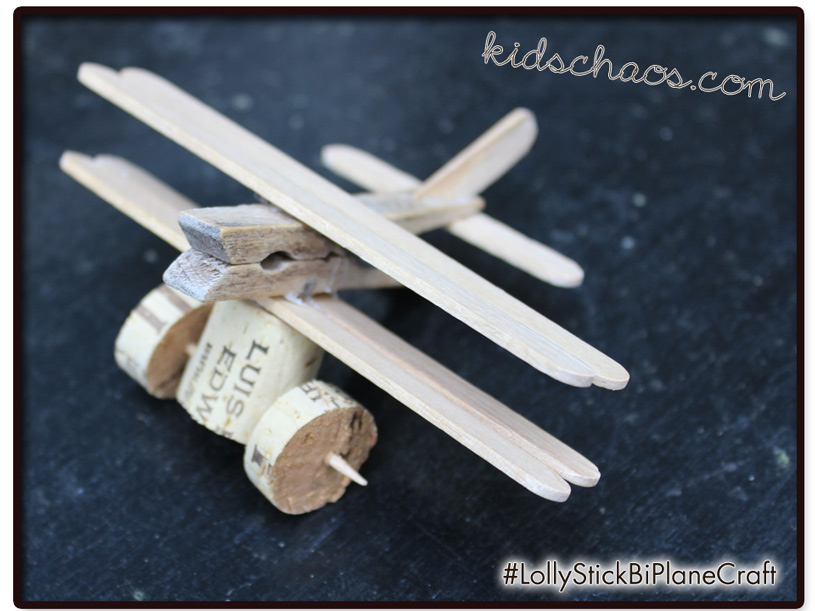
KidsChaosLolly-bi-plane-craft-with-cork

We had previously used slices of corks for wheels on our bi-plane pictured here…click the image to read more about THAT craft too!

hung out on Google+ for a bit of a vlog… with some craft buddies to share these cork crafts, hosted by the ever lovely Maggy from Red Ted Art who showed us several cork crafts, some CUTE Knights and Santas including printed bunting in her book. Pop back later for more links to AntheaKellyLiz, The Fairy and the Frog, and Rebecca.
KidsChaosCorkCraftsHangoutAre you on Google+ Follow me here, and say hello, and I’ll add you back to my circles.

Oh, and I’m on twitter.com/MoreKidsChaos too… Erm, and funnily enough on Facebookand Pinterest! Pop over to say hello x Like it? Pin it!
Ali also writes over on AGreenerLifeforus.com


key stage 3, kids, life

How To Help Your Young Children Become The Best Version Of Themselves

As a parent, you will always want the best for your children. Fortunately, there are plenty of steps that you can take to help make this possible, ensuring that they grow to become the best version of themselves. 

From helping them to strengthen their strategic thinking abilities to discovering hobbies they generally love, read on to find out how you can help your children grow in both skill and confidence! 

Praise your child. While this may seem fairly obvious, one of the easiest ways to help your child grow in confidence is to offer consistent, genuine praise. Not only will this make them feel better about themselves, but studies have found that this kind of positive reinforcement can also improve their resilience or willingness to try something new, as it “sends the message that effort and actions are the sources of success, leading children to believe they can improve their performance through hard work.” 

Teach them to be patient. Teaching your children to be patient can help to develop a range of useful skills, such as empathy and resilience. Not only that, but patience can also help to regulate negative emotions, such as frustration and anger, which means that they are less likely to act or misbehave. Fortunately, there are many different ways in which you can teach your children to be patient. For example, you could start small by saying that they can watch TV in five minutes, as opposed to turning it on right away. This shows them that waiting and being patient have their rewards! 

Help them discover hobbies they enjoy. Hobbies are important at any stage in life, but particularly so during childhood. This is because they help children to develop a host of skills that will not necessarily be covered in the classroom or at nursery. For example, football classes for 3 year olds can not only help improve their mobility and agility, but will also show them the power of working as part of a team for the first time. This, in turn, can help strengthen their social skills and ability to make friends. 

Let them make mistakes. Many children are afraid to make mistakes due to a fear of letting their parents down. This is a mindset that you must actively work to dispel by letting them know that mistakes are just a part of life. One way in which you can achieve this goal is by admitting to your own mistakes and shortcomings. However, instead of framing them as something entirely negative, instead say what you learned because of this mistake. This way, your children will begin to view mistakes as a learning opportunity and not the end of the world. 

You should also make it clear that if they have made a mistake, this is something that you can help them with. This way, they are much more likely to open up to you should they need help. 

Encourage them to talk openly about their emotions. Encouraging your child to talk openly and honestly about how they are feeling will also help them to grow into the best version of themself. This is because it will sharpen their emotional intelligence, while also helping them to understand “big” feelings or emotions that they may be experiencing for the first time.

Again, one of the easiest ways in which you can encourage this behavior from your children is to lead by example. For example, you could spend a little time each evening talking about your day and how certain things made you feel (good and bad). You can then ask your child to do the same. If they express a negative emotion, try to help them understand why they feel that way, and put together a plan they can follow to help them feel better moving forward. 

On a similar note, you should help your child find as many ways as possible to express themselves. For example, some children find it easier to express themselves through crafts, such as painting and drawing over their words, especially in their younger years. Older children may find keeping a diary or journal to be similarly beneficial.

Help them develop their strategic thinking skills. Strategic thinkers are able to rise above challenges, whether that’s in school or the workplace. For this reason, finding effective ways for kids to develop strategic thinking skills is another great way to shape the adult they’ll become for the better. This can be achieved through: 

  • Playing games that encourage them to think strategically, such as Chess, Risk and Checkers.
  • Solving puzzles, such as word searches or Sudoku, together as a family.
  • Encouraging them to ask questions when they do not understand something.
  • Prompting them to think deeply about the things they are learning about by asking questions. 

Let them be children. Letting children simply be children is another great way to help your child become the best (and the happiest) version of themselves. While extracurricular activities are beneficial, they should not take up the bulk of your children’s time, especially in their younger years. Instead, you should ensure that they spend most of their time playing, which is more crucial for healthy child development than you may initially realise. For example, through playing make-believe, they “learn to navigate challenges and understand cause-and-effect relationships.” 

Encourage them to learn an instrument. Learning to play an instrument is another great way to help your child develop a whole host of skills. For example, it can improve everything from their cognitive ability to their coordination skills, whether they are learning to play the guitar or the drums. Ideally, you should let them choose which instrument they’d like to play. This ensures that they are as enthusiastic as possible about the idea of attending music classes, as opposed to feeling as though this is something they are forced to do. 

You should also make sure that you offer them support when practicing, even if they don’t sound all that great to begin with. After all, learning to play an instrument takes time, and while they may have a natural skill, it could be a little while before they are able to play all that well. 

Teach your child to be responsible. Teaching your children to be responsible is also key in helping them to become the best versions of themselves moving forward. Fortunately, there are many ways in which you can ensure that you are raising responsible children. For example, you could start by assigning them weekly, age-appropriate chores in order to get their pocket money or receive a reward. When they do not hold up their end of the bargain, do not give them the reward. This shows them that their actions have clear consequences and will encourage them to be more responsible moving forward. 

Welcoming a pet into your home is another great way to teach your children to be more responsible, though it is not a decision you should make lightly. You should make sure that both your children and you are ready to take on this challenge and provide the pet with the love and care that it deserves. Remember, it is a living being with complex needs, not a learning opportunity. 

Spend quality time with them. Spending quality time with your children will also play a key role in their development and overall self-esteem. This is because spending time together shows your children that they are valued and loved, while also strengthening the bond you share. As such, you should make sure that you always set aside some time in your day for your children. When you’re working, this can be as simple as watching an episode of their favoirte TV show together, or sitting down at the dining room table to eat tea together as opposed to eating separately. 

At the weekend, you have a few more options to choose from, whether you’re spending a sunny day at the park or visiting a local museum. 

Final thoughts. As a parent, you will always want what is best for your child. Fortunately, there are plenty of steps that you can take now to put them in the best possible position as they grow before your eyes. For example, you can help your children to become the best possible versions of themselves by: 

  • Praising them, especially when they are putting themselves outside of their comfort zone. 
  • Teaching them to be patient so that they can regulate their emotions. 
  • Helping them to discover hobbies that they genuinely enjoy 
  • Letting them make mistakes so that they can learn from them
  • Encouraging them to talk openly about their emotions 
  • Helping them to develop their strategic thinking and problem-solving skills 
  • Letting them be children so that they can learn through play
  • Encouraging them to learn an instrument 
  • Teaching them to be responsible and to hold themselves accountable 
  • Spending as much quality time with them as possible

Following the guidance outlined above will ensure that your child has the best start in life, especially if you continue to shower them with love throughout. 

This is a collaborative post.

create, kids

Strategic thinking isn’t limited to the boardroom. Children can develop it early through activities that enhance their planning, anticipating, and problem-solving capabilities. Engaging your children in such activities helps form life-long habits of success that may even make learning fun. In this blog post, we will look at some innovative and fun strategies for kids to practice strategic thinking.

Why Strategy Matters for Kids

Strategic thinking helps children recognise the significance of making informed decisions, taking into account possible consequences, and planning ahead. Strategy equips children with important analytical, organizational and adaptive abilities. From managing resources in games and social situations to taking on challenging homework problems, strategy provides them with important abilities such as analysis, organisation and adaptability. By practicing strategic thinking, children gain perseverance, discipline, and creativity, qualities which will serve them throughout their lives. Not only are these abilities crucial to academic achievement, they’re also great for problem-solving, teamwork, and realising personal goals. Encouraging kids early to adopt this mindset gives them confidence and resilience against future obstacles while turning obstacles into opportunities to develop themselves and reach success.

Building Strategy Through Guided Choice

One powerful yet often overlooked way children develop strategic thinking is through environments that gently guide choice rather than dictate outcomes. When children are given structured options, choosing how to approach a task, deciding which materials to use, or planning the order of activities, they begin to weigh possibilities, anticipate results, and take ownership of decisions. Early learning settings that emphasise this approach, such as a sessional kindergarten, allow children to explore planning and consequence in a safe, supportive space where educators prompt reflection rather than provide answers. This kind of guided autonomy strengthens executive function, encourages independence, and helps children understand that strategy is not about being “right” every time, but about making thoughtful choices and learning from what follows.

The Power of Play  

Play is one of the best ways to teach children strategy. Kids tend to learn best when having fun, and many games encourage strategic thinking naturally.

Board Games That Build Minds  

Time-honored classics such as Chess, Checkers and Risk are effective means for teaching children to think ahead, anticipate opponents’ moves and manage complex situations. But don’t stop with traditional board games. Modern titles like Ticket to Ride, Carcassonne and Catan provide valuable lessons in resource management as well as long-term planning in an entertaining environment. Even simpler titles like Connect Four and Uno require them to consider carefully their next move. View each game as an opportunity to practice patience, consider options and create winning strategies.

Video Games Aren’t Just Fun

Contrary to what many believe, video games can also serve as an excellent platform for teaching strategy. Minecraft promotes creativity while Civilisation introduces resource allocation and decision-making. Even battle royale games or puzzle-based adventures offer kids the chance to practice anticipating outcomes and refining problem-solving skills. Minesweeper is one such example that encourages both strategic thinking and logical deduction. Plus, digital mediums often engage kids more readily than traditional methods, just be sure to balance screen time with offline activities to maintain healthful results.

Strategy in Action  

Beyond games, there are daily opportunities to help children develop strategic thinking abilities.

Puzzle Solving

Puzzles offer children an engaging way to discover patterns, think creatively and form strategies while exercising their minds and building problem-solving skills, not to mention increasing confidence with every successful solution. They can also be tailored specifically to different age groups and abilities so everyone can participate and benefit. From assembling picture pieces or solving challenging riddles, puzzles provide fun yet stimulating exercises designed to help form cognitive growth while also spark curiosity among young learners.

Everyday Problem-Solving

Real world scenarios like planning a family outing or making choices at the grocery store provide excellent opportunities to introduce strategy into everyday situations. You could ask your child for assistance in selecting an efficient route or finding deals in store. These practical problem-solving opportunities bring strategy into their life easily and accessibly.

Active Learning Through Sports and Teamwork

Sports provide children an ideal venue for practicing strategy as they collaborate, adapt, and anticipate in a team environment.

Individual and Team Sports 

Sports like soccer, basketball and tennis provide children with ample opportunity to practice quick decision making under pressure and long-term mental agility. Children learn how to analyse opponents, respond under pressure and adjust tactics quickly without losing focus. An invaluable lesson in flexibility. Other individual sports, like martial arts or gymnastics emphasise goal setting while using tactical thinking for improved performance.

Group Projects and Classroom Work

School assignments provide another means of helping kids develop strategic thinking skills. Give your child leadership roles within tasks to encourage them to develop plans, evaluate options, and coordinate their team. Although not as thrilling as playing kickball games, similar principles apply and can sharpen strategy even in academic environments.

Learning From Stories

Young minds can be deeply influenced by stories and narratives. So why not use them to facilitate strategic thinking?

Books, History, and Role-Playing

Introduce books or historical accounts that focus on strategic moments to spark curiosity and help form brainstorming sessions. Alternatively, consider role-playing games where children “step into” other people and learn to make plans and decisions through simulation of real-life situations. Dungeons & Dragons games can be especially effective here.

Encourage Reflection

Reflective thinking is just as integral to strategic thinking as making decisions. Without it, kids might never learn from past errors or improve upon future strategies.

Journaling and Tracking Progress

Encourage your child to keep a journal of all of the games they played, challenges they experienced, lessons they learned, and self-awareness activities they do each day. Doing this allows them to reflect upon their experiences, understand how their strategies change with time, identify patterns in their thinking patterns that need improving upon, as well as new approaches for improvement. Journaling helps form self-awareness and critical thinking allowing kids to celebrate achievements while reflecting upon setbacks as a way of strengthening both their strategic skills as well as their confidence levels over time.

Celebrate Successes (and Failures)

To form an environment in which mistakes are seen as opportunities to grow, celebrate not only your child’s victories but also their creative attempts and efforts. These activities help build resilience and confidence while teaching challenges to be seen as part of learning processes. By rewarding such behaviors with positive reinforcement you help to form their resilience, teaching how to adapt creatively while appreciating both effort and progress as important components.

Conclusion 

Strategic thinking is a skill that is developed through practice, so the sooner kids start, the better prepared they’ll be for life’s challenges. From honing skills through games to solving daily life problems or looking back on past decisions, strategy can be found everywhere. Remember not to push your child into becoming an overnight master strategist but rather to form growth through creating opportunities, nurturing curiosity, and keeping things lighthearted. Every great thinker started somewhere.

This is a collaborative post.

baking, cooking with kids, crafts, easter, kids

Bunny rabbit cookies with royal icing

With Spring almost here, and Easter around the corner, we thought we’d rustle up some rabbit cookies – or bunny biscuits as we’ve named them! It was a great introduction for 9yo to practice his royal icing piping, and ‘flooding in’ – we learnt a LOT about icing technique!

bunny biscuits royal icing

There are LOADS of bunny cookie cutters around at the moment, we had one which was my Mum’s and for the tail you could use a flower cutter, or a small circle…

We used up some royal icing which had been in the fridge for a couple of days, and we have some TOP TIPS for you about this…see below!

Ingredients:

50g fairtrade caster sugar
100g butter
175g plain flour

Method:

Heat the oven to 150 degrees C (300 F, Gas mark 2)
Cream the caster sugar and the butter together, slowly adding the flour, mixing together to form a dough, I find we need to add a couple of drops of water, knead together to form a ball.

Roll out the dough, on a floured surface, to about 4mm thick.
Using your bunny shaped cutter, cut the dough, and place your bunnies and tails on a lightly floured baking tray, and bake for about 20 minutes, until golden brown. (feel free to make some spare rabbit tails… to munch on whilst you’re icing the rabbit cookies!)

KidsChaos-Bunny-Biscuits-royal-icing

bunny biscuits

As they cool down, you can make your royal icing (recipe here). Or if you are using some icing which you have been keeping in the fridge, as we were, TOP TIP make sure you really really stir the royal icing to get ALL of the lumps out, otherwise it sticks in the piping bag – and clogs the nozzle so that when you are piping the outline it stutters out, and the line will be all wobbly… 9yo wanted a pale brown bunny, so we mixed in his favourite hot chocolate mix, into a portion of the white royal icing and some more Fairtrade icing sugar, so that it’s quite thick to pipe the outlines. When this outline is dry, you add a drop of water to the remaining brown mixture, so that you can spoon it into the outline, and using a cocktail stick, gently ‘flood’ the biscuit, and prick any little bubble that appear.

Pop the ‘tail’ into position whilst the ‘flood in’ icing on the rabbit cookie is still wet, and pipe on the remaining white royal icing to make a fluffy tail!

red-ted-art-google-plus-hangout-kids-chaos-rabbits

For more Spring baking ideas, check out the daffodil cookies here and if you are after some more rabbit crafts have a look at my denim pocket purse with leaping rabbits here (FREE printable) – and watch our latest google+ hangout hosted by Maggy at Redtedart featuring Anthea, Lizzie, myself and Kelly – a great selection of Bunny Crafts!

For easy to follow instructions on how to make a little gift box from a paper plate, perfect for these cookies, please click here.

Tasty Tuesdays on HonestMum.com

Ali also blogs over on incredibusy.com and is a new lover of Instagram too… pop over and say hello! This post was first published March 2014

education, gardening, kids

The Importance of Play in Child Development

Play is an important part of childhood, with numerous reasons why children need to have fun. It plays a crucial role in social, emotional, cognitive, and physical development, providing kids with the necessary skills to navigate the world. As parents and caregivers, you need to foster a play-friendly environment to support a child’s growth and well-being.

Cognitive Benefits of Play

Play helps develop problem-solving skills, critical thinking, and creativity through activities such as building blocks, imaginative games, and puzzles. Children learn to experiment, engage with their surroundings, and explore. Research shows that unstructured play enhances brain development by promoting neural connections and improving memory and attention span. Additionally, pretend play encourages language development, and storytelling, and helps children expand their vocabulary and communication skills. Whether they’re running a pretend store, acting as superheroes, or playing house, they develop essential cognitive abilities that prepare them for academic success in the future.

Social and Emotional Growth Through Play

Interacting with friends during play teaches children valuable social skills such as conflict resolution, sharing, and cooperation. Group play fosters empathy and teamwork, helping children consider others’ feelings and perspectives. Playing together also aids in developing emotional intelligence, allowing children to express and manage their emotions in a safe environment.

Physical play, such as climbing, jumping, running, and skipping, contributes to stress relief and mood regulation by releasing endorphins. It also provides an outlet for children to channel their energy, reducing anxiety and creating a balanced emotional state, while building confidence.

Creating a Safe and Stimulating Play Area with Artificial Grass or Rubber Chippings

Ensuring that children have a safe and stimulating play area is vital for their well-being. Many schools and nurseries are now turning to artificial grass or recycled rubber chippings, as a practical way to create play areas. Artificial turf provides a soft, durable, and low-maintenance surface for schools, which minimises the risks of injuries and allows children to play freely in any weather condition. Artificial grass also alleviates concerns about uneven surfaces, mud, and injuries, making it an excellent option for schools seeking to create a safe environment for their students. Its cushioned texture provides extra safety by reducing the impact of falls and creating a comfortable play zone for your kids. Consider how artificial grass or recycled rubber chippings can enhance your children’s play experience in school’s high footfall play areas.

Final Thoughts

Play is a crucial component of childhood development, shaping the way children interact, grow, and learn. By encouraging play in safe environments, we support their well-being and equip them with the lifelong skills they need for the future. Whether through cognitive challenges, physical activities, or social interactions, play remains an essential part of a child’s journey toward living a healthy and happy life. 

This is a collaborative post.
education, kids

Types of games we think kids could be encouraged to play

As someone who has kids, you may have always been told that it’s bad for them to game. Yes, they can become addicted, but it’s unlikely. It’s a lot more rare than you believe it to be, and it’s easily manageable, using time allowance, such as egg timers, and not having consoles in bedrooms for example. Mix this up with NHS recommended game activities for a great balance. In this post, we’re going to be looking at some of the types of online games that you could be encouraging your kids to play with you, or on their own.

Brain Games

Brain games are not something that you should discourage your kids from playing. Some of them are rated a little higher than for younger kids, but it all depends on the kid. You can look into things like solitaire and spider solitaire which is a variation of the same game. You can also look into things like sudoku and word searches to help them develop their number and letter skills. These are great to play on journeys too with a paper and pen.

Some people find that brain games help their kids to develop and foster advanced problem-solving skills and inspire innovative creativity, making them a great choice for the growing mind.

Board Games

Something that you can and should do together is play board games. There are so many to choose from, so try to get a variety so that they can all be tested out. Some will test balance, others will test knowledge and patience, where others are more strategy based. It depends on what games you find you like to play, but it’s good to spend this time together. They will be developing their skills while having fun and bonding with the family, what could be better?

Video Games

This is where we are going to lose most people, but you shouldn’t go just yet. Video games have their place in the world and it has been known for kids to improve their social skills. Now, we’re not advocating talking to strangers, but playing with friends can really lead to their leadership coming out in certain games. It’s worth letting them explore and come to their own conclusions, you just need to ensure that you stay on top of this and watch out for any signs of addiction.

If you do notice that something isn’t quite right, pull back on this. You should already have a limit for how long they can play and how much they can spend, but you can tighten this if need be.

We hope that you have found this article helpful, and will now think about encouraging your kids to take up some kind of gaming in the future. You have to try and remember that the media have a habit of making everything look worse than it is, and that as long as you keep an eye on things, games are a completely safe and fun way for kids to pass time.

There are a couple of amazing films that might be interesting in terms of positive online gaming friendships – Grand Theft Hamlet. An award-winning feature film about staging Hamlet inside Grand Theft Auto, and The Remarkable Life of Ibelin is an emotional ode to connection and gaming. In this documentary, filmmaker Benjamin Ree and animator Rasmus Tukia honoured the life of gamer Mats Steen. Using World of Warcraft-style animation, this documentary tells the story of Mats, a boy with muscular dystrophy whose online popularity was only revealed after his death.

This is a collaborative post.
crafts, google+ hangouts, key stage 2, kids

Christmas Cards – Stained Glass

There’s still time to make your CHRISTMAS cards, let’s get creative!

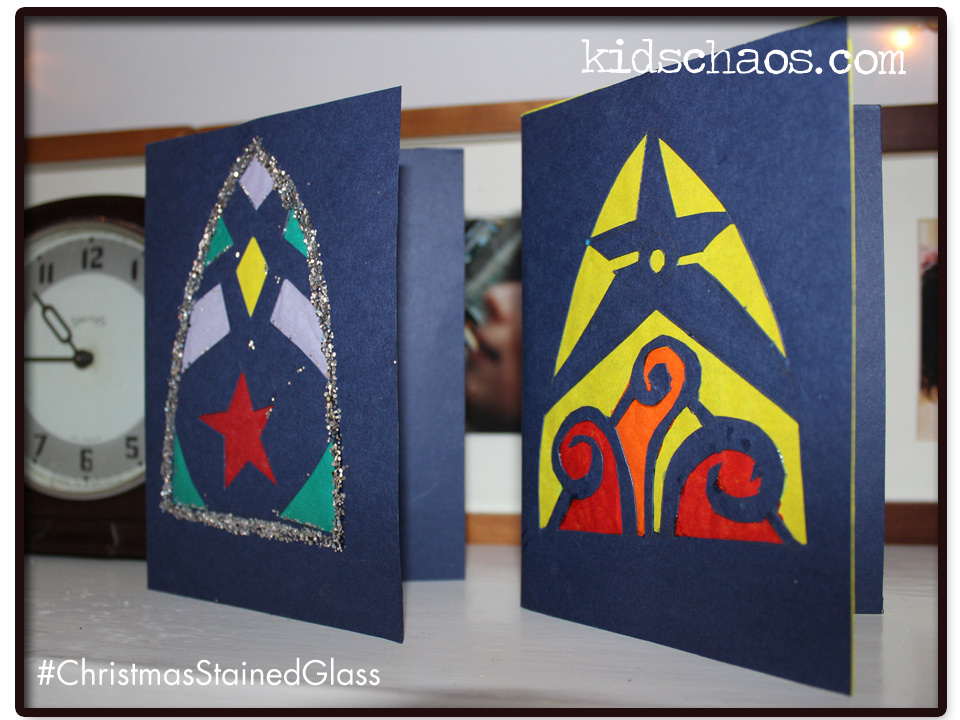
KidsChaos_ChristmasCardsStained-Glass

So we’ve gone all churchy and made these lovely stained glass window style cards…. cutting shapes from the card, and gluing coloured tissue paper behind the apertures.

Eek… I let the boys use a scalpel!

These look fab with a tea-light popped inside (battery operated for safety) or stuck to a window.

Christmas-Card-Hangout-RedTedArt

You may also like our Potato print button nose rudolph cards, and to watch the google+ hangout which was hosted by @RedTedArt here: and Maggy’s fabulous round-up with LOADS of ideas from some amazingly creative blogs including some more stained glass from peaklepie here: christmas-card-ideas-for-kids.

KidsChaos_ChristmasCardsMantle

Oh, by the way, Pinterest! Pop over say hello x LIKE IT? Pin it!

Published 4 Dec 2013.